
The starting point
Buying in another country begins with unfamiliar questions: where to look, how the process works and which assumptions from home no longer apply. A property listing alone leaves much of that work with the buyer.
Janik’s own cabin purchase in Norway in 2022 supplied the original context. Questions he repeatedly answered became the starting point for a permanent resource for German-speaking readers.
What we built
Explain the decision before the enquiry
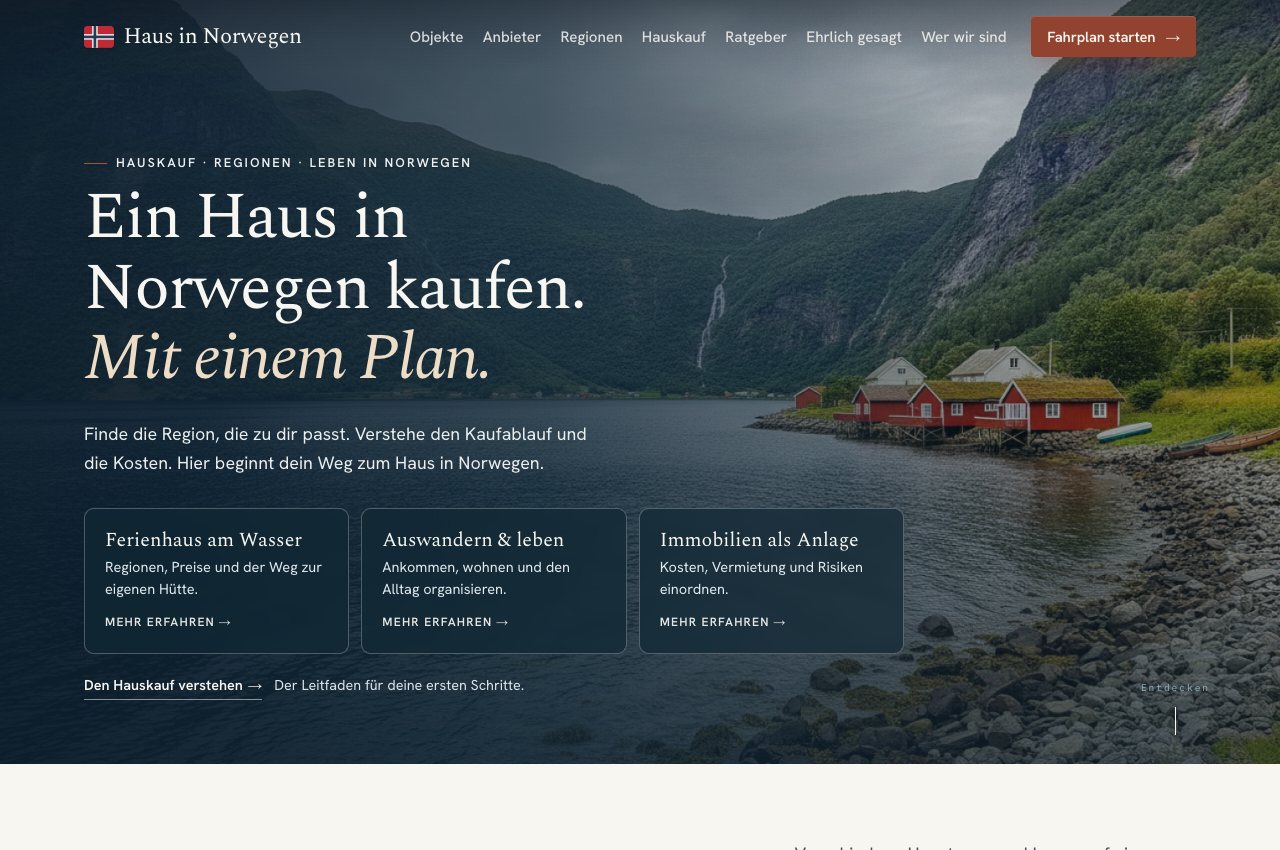
The public product combines editorial guidance with an interactive country introduction. Region and buying-process information help readers understand what they are considering before they contact a professional.
Use tools where a static article is not enough
Maps and indicative price tools give readers ways to explore the country and put their questions in context. Their role is orientation. A calculator does not inspect a property or replace an individual assessment of costs and conditions.
Connect readers to the next conversation
The enquiry route gathers what the reader is looking for. The business can then discuss the request and the appropriate next step. Editorial content, enquiry intake and the relevant property professional each have a different job.
Give the reader a route through the decision.
The current country resource connects region discovery with the purchase process and indicative price orientation. A person researching a holiday home can approach it differently from someone considering a move. The public interface offers those entry points without requiring a sales conversation first.
The editorial material remains important around the interactive parts. Maps help with orientation, while written guidance explains the questions that need closer examination. The enquiry should be the continuation of that research: what the reader wants, where they are looking and which part of the process still needs help.
How it works
- 01
Explore the country
Understand regions and the kind of property sought.
- 02
Learn the process
Read the relevant practical guidance and use orientation tools.
- 03
Explain the requirement
Send a specific enquiry rather than a generic expression of interest.
What exists today
Buyer guidance
A public resource written for German-speaking readers.
Interactive exploration
Country orientation and practical planning interfaces.
Enquiry route
A way to turn research into a concrete request.
What the work taught us
The founder’s previously published account describes a shift from high article volume towards fewer, deeper answers. That remains the useful principle: a buyer needs reliable context for a real decision, not more pages to read.
The connection to tyskekjøpere adds another perspective. The buyer-facing resource explains the questions; the seller-facing marketing service explains how a property can reach that audience. Those two products share context without being the same service.
Read the related Thought →Sources and scope
Editorial information and planning tools provide orientation. Property, legal and financing decisions require the relevant professional advice. This case does not publish current lead volume or attribute completed property sales.
Public product pages checked and case text updated on . Historical founder accounts retain their original context.