
The starting point
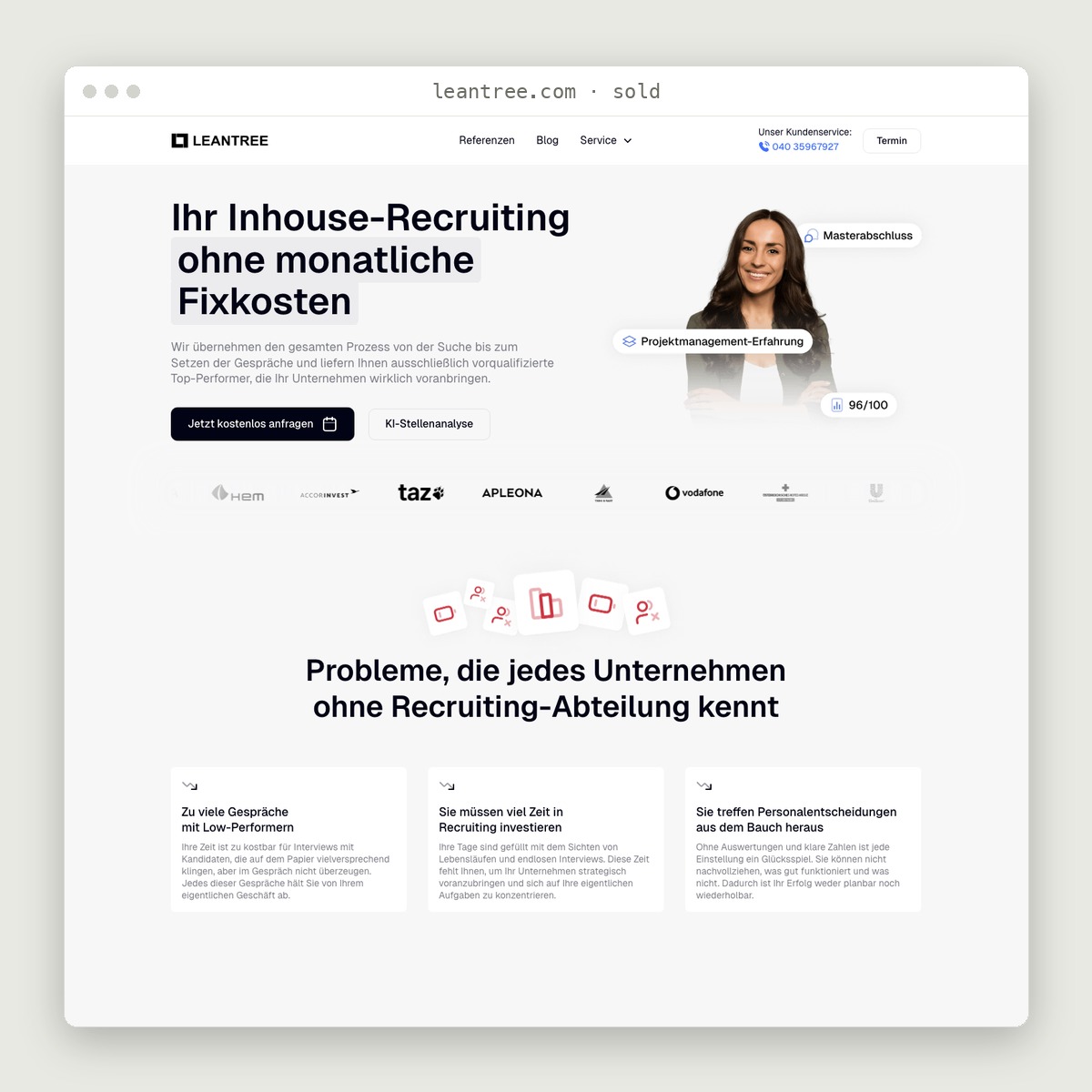
Recruiting teams were buying attention but still needed to turn it into suitable applications. Janik’s earlier project account describes taking performance-marketing methods into hiring: build a focused route from an advertisement to a useful applicant conversation.
Leantree became a company with a team and client delivery work. That experience matters here because the decisions behind Deimann’s shared software and operating model were shaped by having run a service business first.
What we built
Build a role-specific entry point
Social campaigns led into mobile application funnels built around the role. Candidates could answer relevant questions without starting with a traditional CV upload. The first interaction was designed around the hiring decision the client needed to make.
Connect the funnel to the hiring team
Campaign management, application qualification, reporting and applicant-tracking integrations formed the service. The work continued after an application arrived: the client needed the information in a process its team could actually use.
Operate the business behind the funnel
The founder’s published account describes retainers, success fees and a team of about fifteen people. That is historical context, not the current staffing or revenue of Deimann Com. The delivery model required coordination as well as marketing and software.
The business around the funnel becomes part of the product.
The founder’s earlier account describes a service that grew with campaign management, reporting and client coordination. The funnel was repeatable, but each client relationship still created work for the organisation. A reusable interface did not remove the need to manage delivery.
That is the connection to the later portfolio. Deimann’s aim is to make useful operating work reusable while keeping the owner of a decision clear. The lesson comes from having run a business with people and enterprise clients, then choosing a different approach for the next company. The 2026 exit is part of that founder history; no deal value is published here.
How it works
- 01
Reach the candidate
Use a campaign suited to the role.
- 02
Qualify the application
Ask focused questions in a mobile funnel.
- 03
Hand it to the hiring process
Connect the useful application with the client’s team.
What exists today
Enterprise work
The published Leantree history names Vodafone, Unilever and TUI.
Additional founder reference
Janik confirmed work with Implenia during the Leantree period.
Exit in 2026
The business belongs to the founder’s track record, not the active portfolio.
Selected references
From Janik’s work at Leantree. These names refer to the founder’s earlier recruiting business, exited in 2026.
 Vodafone
 Unilever
 TUI
TUI Implenia
What the work taught us
The funnels and their connections were an asset in their own right. The client was paying for a functioning route to candidates, which needed more than an advertising budget. That thinking carries into Konfigurator.io today.
The second lesson concerned the company around the work. As client delivery grew, more of the founder’s attention went to coordinating people. Deimann’s current approach explores how shared software and clearer responsibility can change the recurring effort required to run a portfolio.
Sources and scope
Historical founder experience. Reference names describe past work; no client-specific hiring results, testimonials or current client relationship are asserted. The post-exit operation of Leantree is outside this case.
Public product pages checked and case text updated on . Historical founder accounts retain their original context.